May 13, 2026 • Marcus Delray • 9 min reading time • Prices verified June 4, 2026
Adidas Goletto IX: FG vs TF vs Laceless — Which Surface Version Is Actually Worth Your Money
If you’ve been shopping for football boots and you’ve landed on the Adidas Goletto IX, you’ve probably noticed something a little confusing: the same boot name comes in multiple versions designed for completely different playing surfaces. FG means Firm Ground — the classic molded cleats you’d wear on natural grass. TF means Turf — a rubber-studded sole built for artificial turf fields, the kind with the little black rubber crumbs. And Laceless is exactly what it sounds like: a version of the boot with no laces, held on by a snug upper that wraps your foot. Each version carries a different price point, fits differently, and is genuinely built for a different playing environment. Pick the wrong one and you’ll either be slipping around on the wrong surface or spending money on a feature you don’t need. This guide cuts through the noise so you leave knowing exactly which version makes sense for how and where you play.
What the Goletto IX Actually Is (And Where It Sits in the Adidas Lineup)
The Goletto silo — “silo” is the industry term for a distinct boot family, like a product line within Adidas’s broader catalogue — has historically served as Adidas’s value-tier and youth-friendly entry point. It sits below the Copa, Predator, and X Speedportal families in both price and feature complexity. For 2025–2026, the Goletto IX lands in a price band that FootwearNews’s coverage of Adidas’s boot line refresh places squarely in the $40–$75 range depending on version and retailer, making it one of the brand’s clearest recommendations for recreational players, youth athletes, and budget-conscious club players who need a reliable workhorse rather than a performance showpiece.
SoccerBible’s analysis of the Goletto silo describes it as a “first serious boot” option — durable enough for consistent weekly use, but not engineered with the same weight-obsessive, touch-optimized materials you’d find in the Copa Pure or Predator Elite. The upper is synthetic across all versions, which keeps the price down and makes it more water-resistant than leather-based alternatives. That’s a practical plus for players in wetter climates or on poorly drained pitches.
The key tension in the Goletto IX lineup is that three meaningfully different boots share the same name. Here’s the fast-read version before we go deeper:
Surface and Price at a Glance
| Version | Typical Price Range | Primary Surface | Stud Type | Tier |
|---|---|---|---|---|
| Goletto IX FG | $45–$65 | Natural grass, dry/firm | Molded conical/bladed | adidas — $24.49 |
| Goletto IX TF | $40–$60 | Artificial turf (3G/4G) | Short rubber multi-stud | adidas — $24.49 |
| Goletto IX Laceless FG | $55–$75 | Natural grass, dry/firm | Molded conical/bladed | adidas — $28.00 |
FG vs TF vs Laceless: A Head-to-Head Breakdown
### Goletto IX FG — The Core Boot for Natural Grass
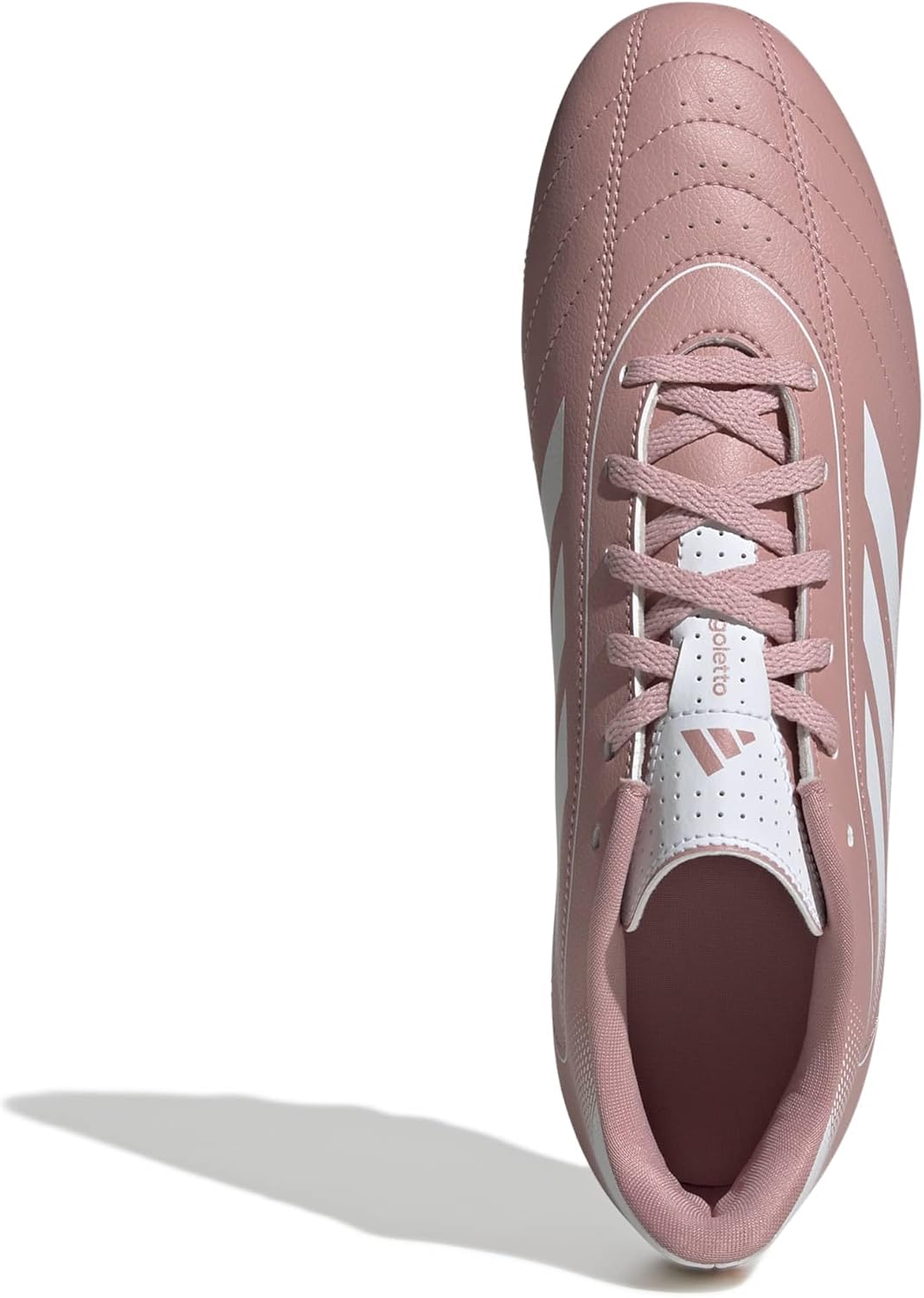
The FG version is the right call if you play on natural grass — specifically on firm, dry, or moderately soft natural pitches. The molded studs (the raised plastic pegs on the sole) penetrate natural turf cleanly, give you push-off traction, and release properly when you pivot. On a well-maintained grass pitch, this version does exactly what it’s supposed to do, and at $45–$65 it does it without asking you to stretch your budget.
FootballBoots.co.uk’s entry-tier surface guide consistently flags surface mismatch as the single most costly mistake budget-tier buyers make — specifically, purchasing whatever’s on sale without checking what surface they actually play on. The molded FG studs on artificial turf concentrate pressure unevenly across the turf mat, reducing grip and increasing the chance of studs catching rather than releasing cleanly on a pivot. In many organized leagues, using FG studs on synthetic surfaces also violates equipment regulations.
The FG is the foundational product of the Goletto IX range. If you play on natural grass more than 80% of the time, this is your version.
adidas
$24.49
In stock on Amazon
Check price on Amazon### Goletto IX TF — The Correct Tool for Synthetic Surfaces
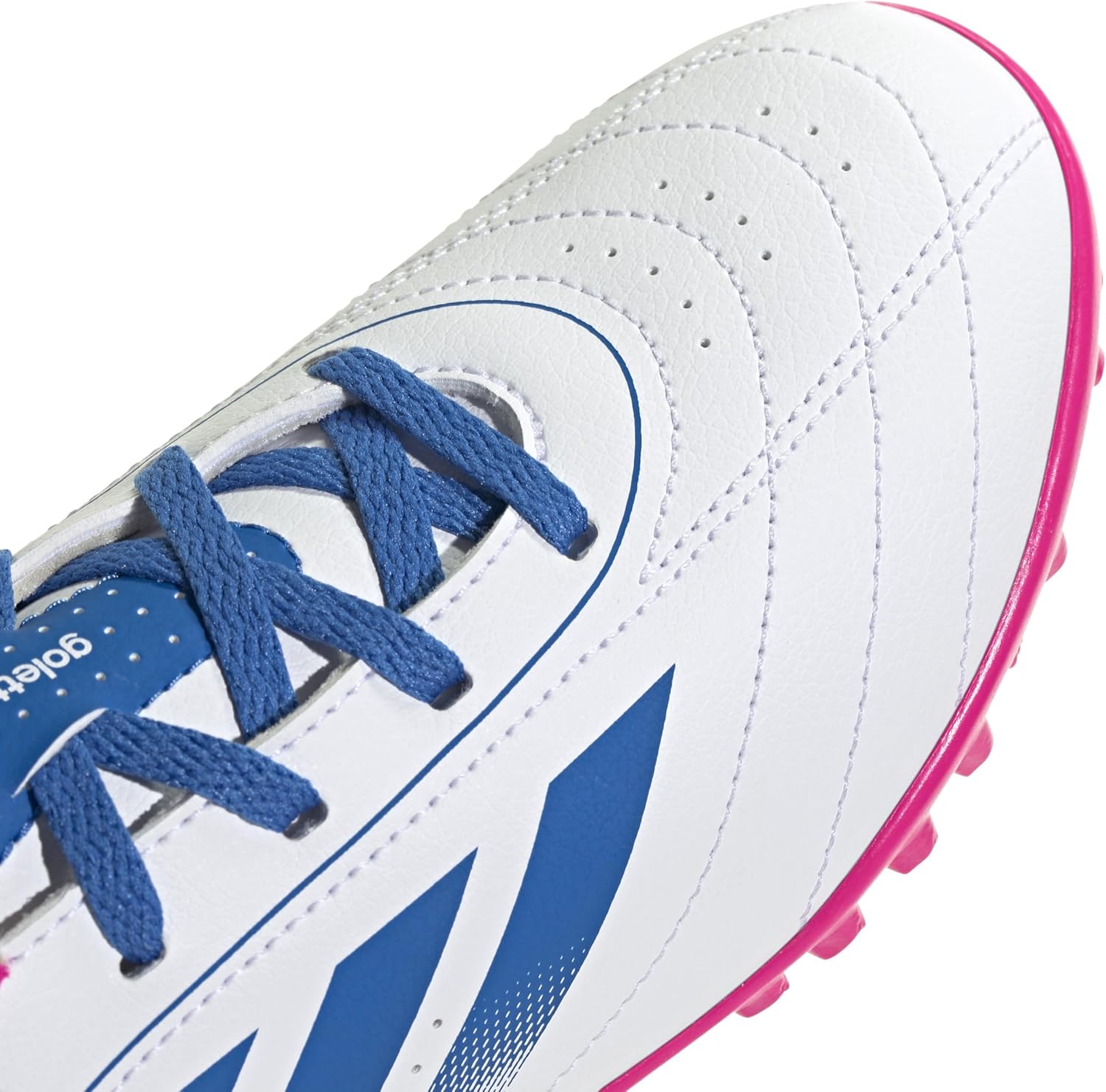
The TF version is engineered specifically for artificial surfaces. The sole features a much higher number of shorter rubber studs spread across a wider surface area. This design distributes body weight across the turf mat instead of concentrating it at a few points, which is what gives you grip on synthetic fibers rather than forcing studs through them.
Goal.com’s budget boot buyer’s guide for 2025 notes that for players who spend 100% of their time on 3G or 4G artificial turf, the TF version isn’t a downgrade from the FG — it is the correct product, full stop. The framing of TF as “lesser” is a persistent misconception; it simply reflects that the stud geometry is optimized for a completely different surface interaction.
The honest limit of the FG/TF choice: if you play on both surfaces regularly — home games on artificial turf and away games or cup matches on natural grass — one boot will always be slightly wrong. The Goletto IX doesn’t offer an AG (artificial grass) hybrid sole at its price point. That’s not a knock on the boot; AG soles typically appear at the $80–$150+ range. At the Goletto IX’s price point, the practical answer is often to own both versions (the combined cost still often beats a single mid-tier AG boot) or to pick whichever surface you play on more and accept the compromise on the other.
adidas
$24.49
In stock on Amazon
Check price on Amazon### Goletto IX Laceless FG — Convenience Feature or Real Upgrade?
The Laceless version is the most likely to trip up a savvy buyer, because “laceless” sounds like a performance feature — and in elite boots, it is. On the Predator Elite or Copa Pure.2, a laceless construction means a precision-engineered sleeve that locks the foot in place for a cleaner striking surface and a more locked-in feel at speed. That’s a legitimate performance advantage when premium materials and a fit system designed to handle the tension back it up.
On the Goletto IX, the laceless version is a different proposition. The boot uses the same synthetic upper as the standard FG, but the lace closure is replaced by an elasticated or strap-based system. SoccerBible’s tier analysis of the Goletto silo flags that at this price point, laceless construction is primarily a convenience and youth-fit feature rather than a strict performance upgrade. Players who sit within the standard volume range for the boot — not too wide, not too narrow — report that the fit feels secure. Players at either width extreme, however, often find that a standard laced boot gives them more adjustability.
The practical decision frame for the Laceless version:
- If you’re buying for a younger player (roughly U8–U12) who struggles with laces during a fast pregame setup, the laceless version offers genuine quality-of-life value. The $10–$15 premium is worth it purely for the time and frustration it saves.
- If you’re an adult recreational player with standard-width feet, the laceless version is a reasonable option if you prefer the look or the ease of on/off. You are not getting a meaningful performance advantage over the laced FG version.
- If you have wide feet, high-volume feet, or any foot shape that typically requires lace adjustment to get a snug fit without hotspots, avoid the laceless version. FootballBoots.co.uk’s surface and fit guide specifically notes that value-tier laceless constructions apply pressure unevenly and cannot be adjusted the way a standard lace pattern can.
One sizing note that applies across all Goletto IX versions: the boot runs slightly narrow in the toebox by aggregated owner reports. If you’re between sizes or have a wider foot, consider going up half a size before committing — especially on the laceless version where you cannot compensate with lace tension.
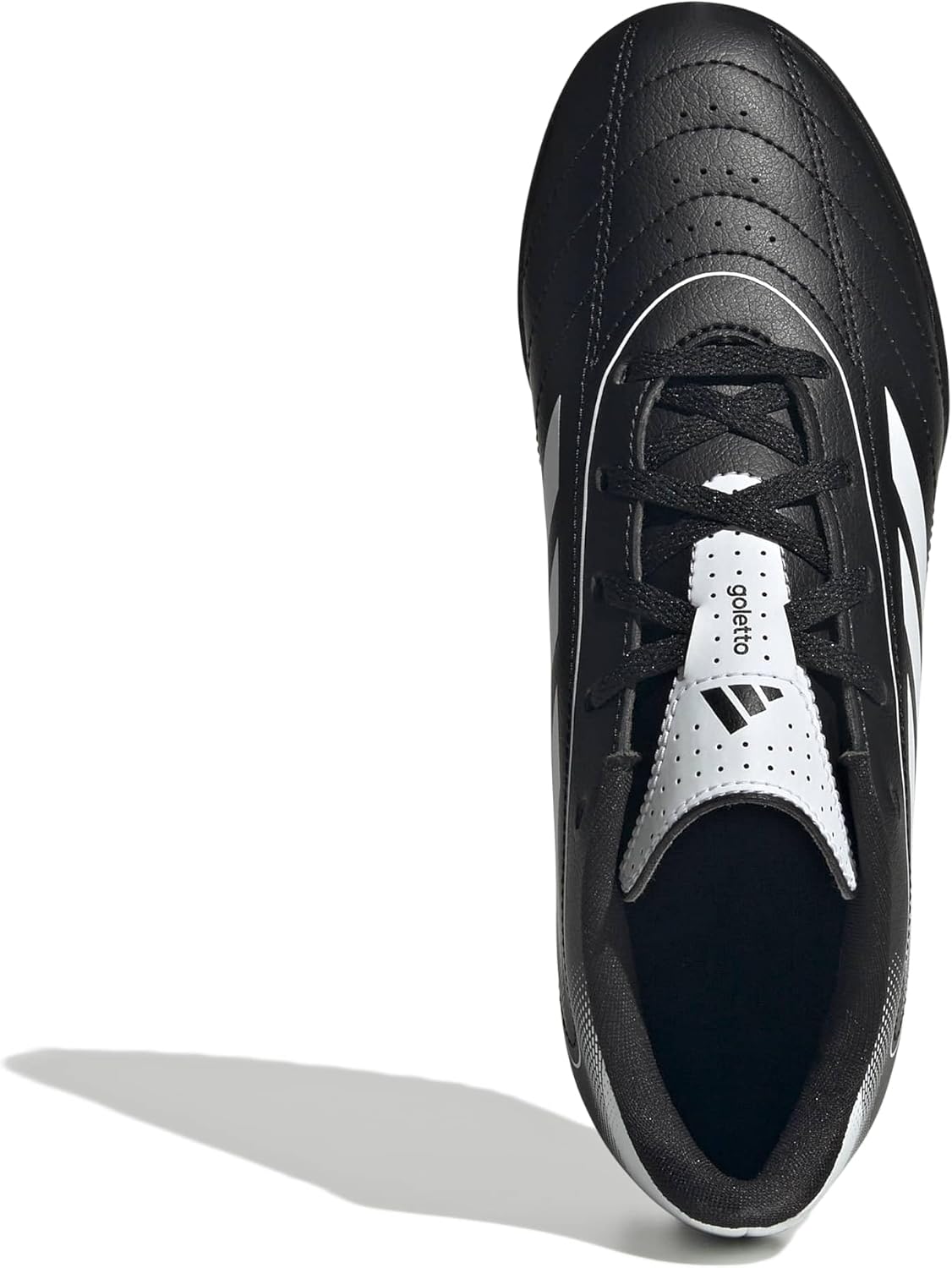
adidas
$28.00
In stock on Amazon
Check price on AmazonThe Cost-Per-Match Math at This Price Tier
Here’s where the Goletto IX’s value proposition gets interesting for the buyer who thinks in terms of cost efficiency rather than sticker price.
At $45–$75 depending on version, the Goletto IX is priced as a working boot rather than an investment piece. If you play 30 matches per season and the boot lasts one and a half seasons (45 matches — a conservative but realistic estimate for a synthetic upper at that use frequency), you’re looking at roughly $1.00–$1.67 per match on cost. That’s the same underlying math that makes a $250 Predator Elite defensible at 150+ matches, but the Goletto IX delivers it without the upfront risk. For a recreational adult player, a youth athlete still growing through shoe sizes, or anyone who isn’t certain they’ll maintain that match volume, the cost-per-match math is genuinely hard to argue with.
The version that breaks the math is buying the wrong surface variant. FootwearNews’s coverage of Adidas’s 2025–2026 boot line notes that the accelerated wear pattern from using molded FG studs on abrasive synthetic turf surfaces is one of the most commonly cited complaints in mid-season reviews. A $50 FG boot used exclusively on artificial turf will likely show accelerated wear on the stud bases — the plastic softens and rounds faster on the abrasive synthetic surface — effectively cutting the boot’s functional lifespan in half. That moves your cost-per-match from $1.00 to $2.00 or more, and you’re playing with degraded grip the entire time. Surface correctness is the cheapest performance upgrade available at this price tier, and the Goletto IX range makes that choice explicit by design.
The Clear Decision Rule
If you’ve read this far, here is the if/then framework to close the decision:
If you play exclusively or primarily on natural grass: Buy the Goletto IX FG. It’s the core product this boot was designed around, and it delivers reliable performance at the lowest price point in the range.
If you play exclusively or primarily on artificial turf (3G or 4G): Buy the Goletto IX TF. It is not a downgrade. It is the correct boot for your surface, and Goal.com’s 2025 budget boot guide supports exactly that framing.
If you play on both surfaces regularly: Buy the TF for your turf games and evaluate whether the FG is worth adding. At this price point, owning both is often more economical than moving up to a mid-tier AG boot. SoccerBible’s silo notes confirm that the Goletto IX does not offer an AG variant, making the two-boot solution the most pragmatic path for mixed-surface players.
If you’re buying for a youth player who struggles with laces, and they have standard-width feet: The Laceless FG is worth the small premium. For adult buyers or wide-footed players of any age, stick with the standard laced FG and put that $10–$15 toward a quality pair of replacement insoles instead.
The Goletto IX is an honest boot at an honest price. It won’t pretend to be something it isn’t, and neither should your buying decision.