May 1, 2026 • Marcus Delray • 8 min reading time • Prices verified June 4, 2026
The Adidas Samba Indoor at $90–$95: Cult Classic or Overpriced Futsal Shoe for Serious Club Players
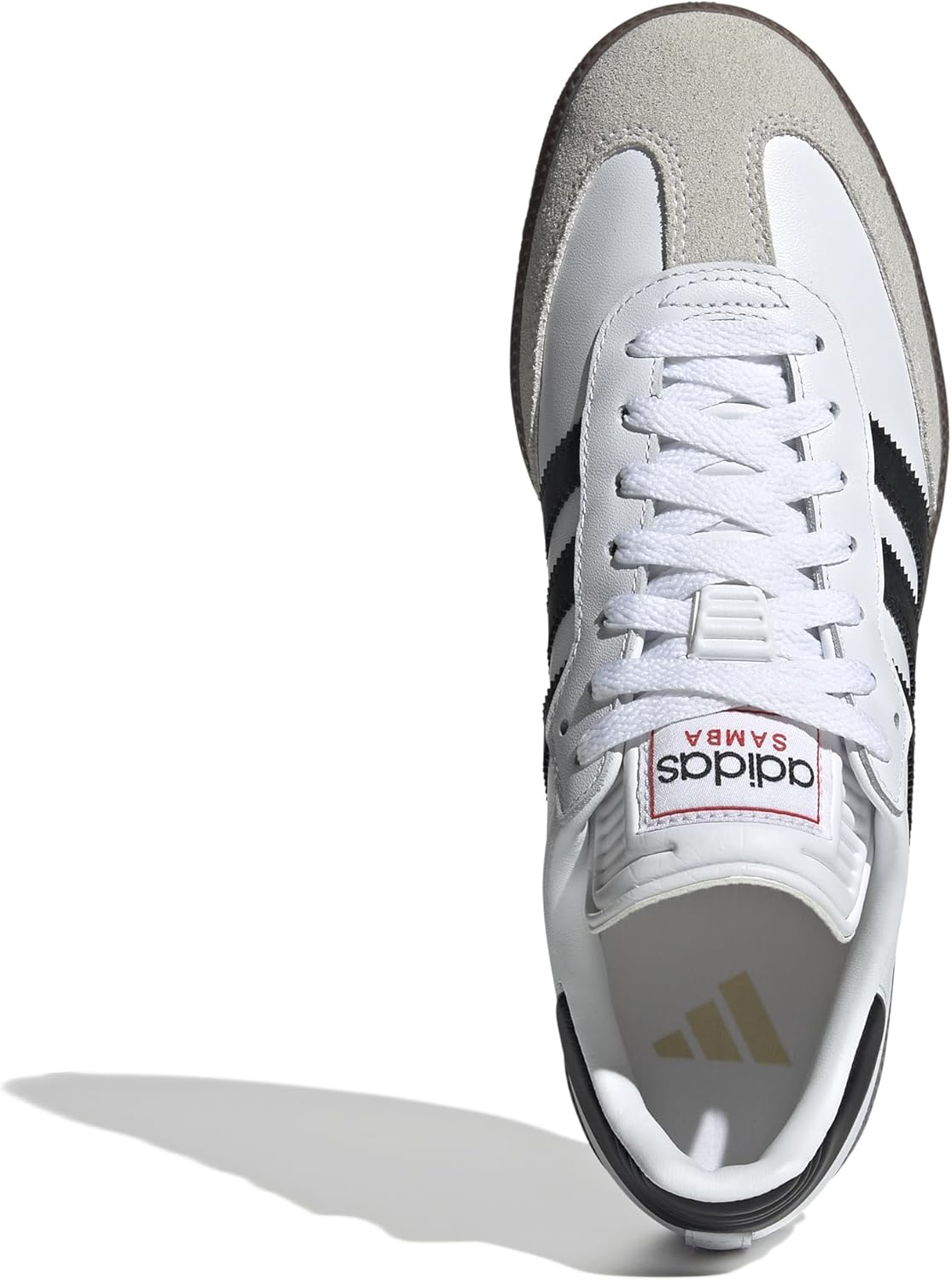
The Adidas Samba has been around since 1950 — originally designed as a training shoe for frozen outdoor pitches, it found its true home on indoor courts and futsal surfaces (futsal is a version of football played five-a-side on a hard, flat court, usually indoors). In 2026, the Samba Indoor — the performance-oriented version of the silhouette, distinct from the lifestyle sneaker that’s been dominating streetwear for the past few years — retails for roughly $90–$95. If you’re a club player shopping for an indoor or futsal shoe, that price puts it in direct competition with purpose-built performance options from Nike, Puma, and New Balance. This article breaks down whether the Samba Indoor earns that price tag as a serious football shoe, or whether you’re paying a heritage premium for a shoe that’s coasting on nostalgia.
We haven’t worn these ourselves — our editorial role here is synthesizing published expert reviews, owner reports, and spec comparisons so you can make a more informed call. We’ll name every tradeoff clearly.
What You’re Actually Buying at $90–$95
The Samba Indoor is not the same shoe as the Samba OG you see on every streetwear account. The performance version retains the low-profile silhouette and gum rubber outsole, but it’s built around a different brief: grip and feel on hard indoor surfaces (HIC — hard indoor court, like gym flooring) and on futsal-specific courts. The key spec markers are:
- Upper: Leather or leather-synthetic hybrid depending on colorway, with a T-toe overlay stitched across the forefoot for structure
- Outsole: Non-marking gum rubber, with a herringbone or pivot-point pattern tuned for hard courts
- Last shape: Relatively narrow through the midfoot, with a slightly roomy toe box compared to the lifestyle version
- Sole thickness: Low to the ground — designed for court feel, not cushioning
Per SoccerBible’s Adidas Samba heritage overview, the original brief was “direct touch and court grip above everything else.” That 70-year-old design philosophy is still the shoe’s core selling point — and also its most significant limitation for some buyers.
By the numbers:
| Adidas Samba Indoor | Nike Streetgato | Puma Attacanto IT | |
|---|---|---|---|
| Price (May 2026) | ~$92 | ~$80 | ~$75 |
| Upper | Leather/synthetic | Synthetic mesh | Synthetic |
| Outsole | Gum rubber | Non-marking rubber | Non-marking rubber |
| Court feel rating* | High | Medium | Medium |
*Based on aggregated owner descriptions across FootballBoots.co.uk long-term wear reviews and Goal.com indoor boot buyer’s guide 2025.
Where the Samba Indoor Actually Performs Well
If you’re playing regular futsal — meaning the 5-a-side game on a dedicated hard rubber or wood surface — reviewers at FootballBoots.co.uk consistently describe the Samba Indoor’s gum rubber outsole as one of the better-performing surfaces in the category for first-step traction and lateral cuts. The herringbone pattern doesn’t dig in the way an FG (firm-ground, outdoor cleated) boot does, but it generates enough surface friction that pivoting and cutting feel intentional rather than slippery. Owners in long-term wear reports note that the gum rubber holds up well past the 50-hour mark, which is notable at this price — cheaper outsoles start degrading visibly in the $55–$70 price band.
The leather upper is the second genuine performance argument. At $90, you’re getting a natural leather touch layer (on the standard non-synthetic colorways) that provides ball feedback that’s genuinely difficult to replicate in a synthetic at the same price point. Footy Headlines’ 2025 colorway and spec release notes describe the toe box leather as “soft out of the box with minimal break-in relative to comparable leather uppers.” For a contact-heavy position — attacking midfielder, winger, or a futsal player who handles the ball constantly — that touch quality matters. It’s not a marketing claim; it’s a material property that owners reliably report.
The low-to-the-ground sole stack is the third argument. If you’ve played in a thicker-soled training shoe on a hard court, you know how disorienting it is to feel detached from the surface. The Samba Indoor keeps you close to the floor, which contributes to a more reactive feel when receiving and distributing quickly. Goal.com’s indoor and futsal boot buyer’s guide for 2025 specifically calls out the Samba Indoor as a top recommendation for “players who prioritize feel and court feedback over impact protection.”
Where the $90 Price Tag Gets Harder to Justify
Here’s the honest version of the tradeoffs.
You are paying a brand premium. Footwear News’ analysis of Adidas Samba pricing across the 2024–2025 period makes the dynamic explicit: the lifestyle Samba boom inflated perceived desirability and enabled incremental price increases across the whole Samba line, including the performance version. The Samba Indoor was a $65–$75 shoe four years ago. The core design hasn’t changed materially. What changed is demand, and with it, the price floor. If you’re buying strictly on performance-per-dollar, the $92 Samba Indoor is harder to defend than it was in 2022.
The last shape is not for everyone. Reviewers consistently describe the fit as medium-to-narrow through the instep and midfoot, widening slightly in the toe box. If you have a wide foot or a high-volume foot (meaning thick across the top, not just wide), the Samba Indoor will compress across the midfoot within the first twenty minutes of play, and no amount of break-in resolves a structural mismatch between your foot shape and the shoe’s last (the internal form the shoe is built around). This is not a flaw — it’s a fit reality. The Adidas Copa Sense Indoor or the New Balance Furon Dispatch IC are broader options worth comparing before committing.
It is not a multi-surface shoe. The gum rubber outsole is purpose-designed for hard indoor courts. Using it on artificial turf — even the shorter-pile AG (artificial grass) indoor surfaces — will accelerate outsole wear significantly, and using it on natural grass is both a performance failure and a warranty trap (most manufacturers void outsole wear claims for off-surface use). If you need one shoe to handle both indoor hard courts and a gym turf surface, the Samba Indoor isn’t it. Purpose-correct surface choice is the cheapest performance upgrade available to any player, and this shoe demands you respect that.
The cushioning is genuinely minimal. Some players love this; others find that after 60–90 minutes on a hard gym floor, the low sole stack creates cumulative foot fatigue. If you’re playing multiple sessions per week, that fatigue compounds. FootballBoots.co.uk’s long-term wear review flags this specifically for older players or those managing any plantar or forefoot sensitivity — the Samba Indoor’s court-feel priority comes at a direct tradeoff in shock management.
The Competitor Comparison You Need to Run
At $90–$95, you’re in a category where three or four alternatives deserve honest consideration before defaulting to the Samba name:
Nike Streetgato (~$80): Lighter, synthetic upper, slightly more cushioned midsole. Reviewers describe a more “modern” fit with a higher instep volume. Loses some ball-touch quality versus leather. Better for players who want a bit more protection on hard floors. Goal.com rates it marginally behind the Samba for pure touch but ahead for comfort over long sessions.
Puma Attacanto IT (~$75): The value argument. Synthetic upper, solid non-marking outsole, designed for recreational-to-club level indoor play. At $15–$20 less than the Samba, it doesn’t match the leather touch quality, but for players who aren’t obsessing over first-touch precision or who are buying their second pair after destroying a first pair, it’s a rational pick.
Adidas Copa Pure.2 IN (~$100–$110): If you’re already at $90 and touch quality is your primary reason for choosing the Samba Indoor, add $15 and look at the Copa Pure.2 IN. Reviewers at SoccerBible and FootballBoots.co.uk consistently place the Copa Pure.2 series above the Samba Indoor for pure touch and ball feel, with a better-fitting last for medium-to-wide feet. The cost-per-match math favors the Copa Pure.2 if you’re playing twice a week and the Samba Indoor’s fit is a question mark for your foot shape.
End-of-cycle elite boots: Worth a flag for the deal-conscious buyer — when a previous-generation Copa Sense IN or Predator Accuracy IN clears out at $65–$75, you’re getting a step up in construction at below-Samba pricing. Check the end-of-cycle bins before paying $92 for a 70-year-old design.
The Decision Rule
This is a practitioner article, so here’s the explicit frame:
If you have a medium-to-narrow foot, play primarily on hard indoor courts or dedicated futsal surfaces, and ball touch / surface feedback is your top priority — the Samba Indoor at $90 is justified. The leather upper and gum rubber outsole combination genuinely delivers what the shoe promises, and the outsole durability over the long haul is above average for the price. You are paying a modest brand premium, but the core performance is there.
If you have a wide or high-volume foot, stop here. The last shape will fight you all session. The Copa Sense IN, Furon Dispatch IC, or even the Streetgato’s higher instep volume will serve you better. Don’t buy a shoe you’ll resent in the second half.
If your budget needs to flex across surfaces — hard court one night, turf the next — the Samba Indoor is the wrong tool. It’s purpose-built for one surface type. Misusing it will cost you outsole life and won’t give you the performance it promises on any non-HIC surface.
If touch quality is your driver but you can stretch $15 more: Look at the Copa Pure.2 IN first. Based on aggregated owner and expert reviews, it’s the better shoe for the money when those two criteria are the decision filter.
The Samba Indoor is not overpriced for what it is. It is overpriced for what it used to cost. Those are different statements — and knowing which one applies to you is the decision.