May 25, 2026 • Marcus Delray • 9 min reading time • Prices verified June 4, 2026
Indoor Soccer Shoes Buying Guide: Why the Surface You Play On Should Pick the Shoe, Not the Other Way Around
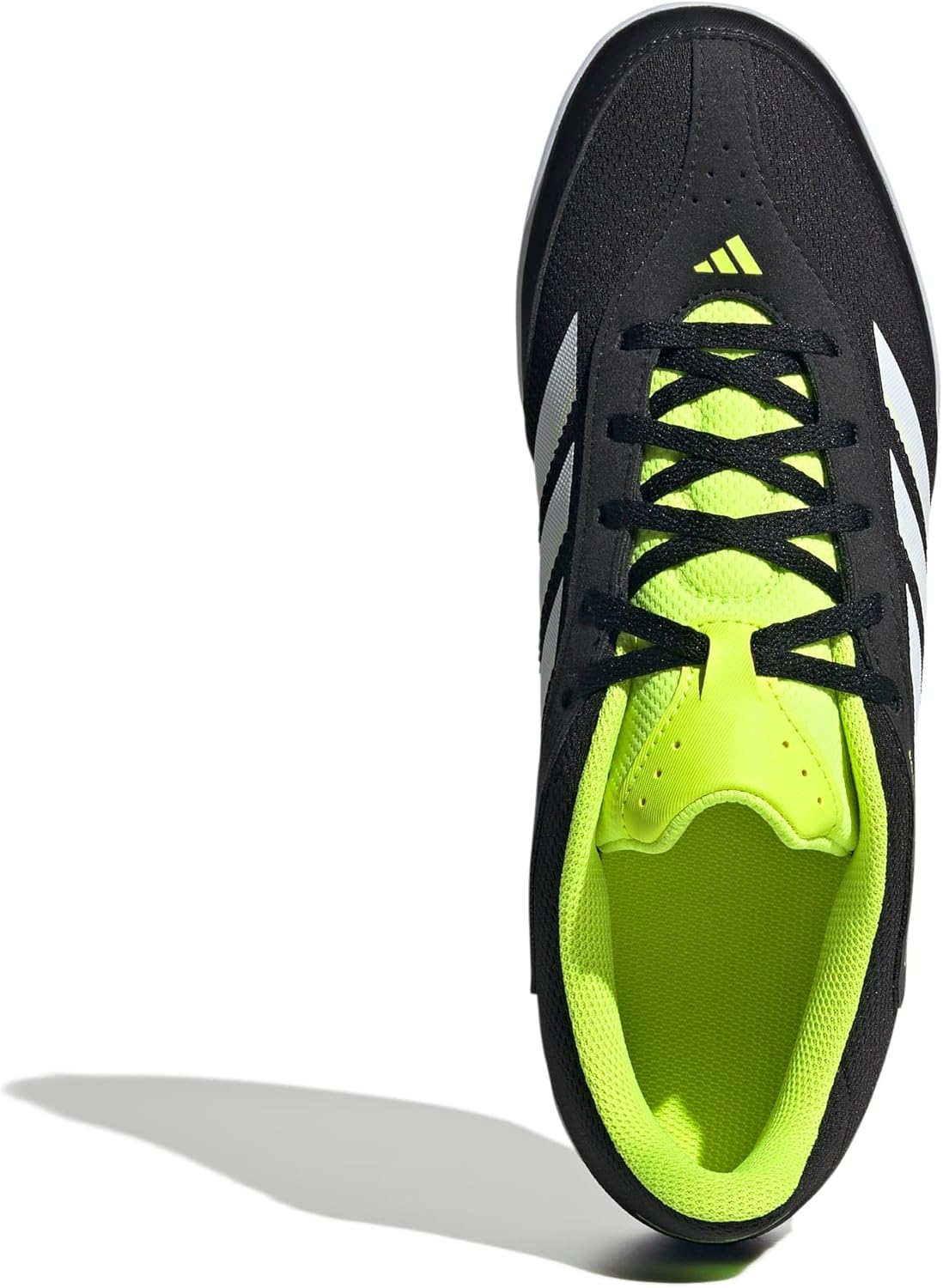
If you’ve ever shown up to an indoor soccer game in the wrong shoes — the ones with tiny rubber studs instead of a flat sole — you already know the problem. You’re slipping on turns, your knees are absorbing impact the shoe wasn’t designed to soften, and the facility manager is giving you the look. Indoor soccer is played on several distinct surfaces: hardwood gym floors, smooth synthetic futsal courts, low-pile turf, and artificial grass with rubber infill. Each one grips and wears differently underfoot, and each one demands a different kind of outsole (the bottom of the shoe). The good news is that once you understand how surfaces and soles match up, buying becomes straightforward. This guide gives you that framework — and then names specific shoes worth your money at each tier.
| EDITOR'S PICK[Adidas Unisex League Indoor Soc…](https://www.amazon.com/dp/B0D2JG5QNS?tag=greenflower20-20) | Mid-tier[PUMA Mens King 21 Indoor Sneake…](https://www.amazon.com/dp/B0B7G7Z8GW?tag=greenflower20-20) | Budget pick[PUMA Mens King 21 Indoor Soccer…](https://www.amazon.com/dp/B0B7G7Z8GW?tag=greenflower20-20) | |
|---|---|---|---|
| Gender | Unisex | Men | Men |
| Model | League | King 21 | King 21 |
| Color | Signal Coral/White/Beam Orange | White | White/New Navy/Silver Mist |
| Price | $65.65 | $47.98 | $29.99 |
| See on Amazon → | See on Amazon → | See on Amazon → |
The Four Indoor Surfaces (and Why They’re Not Interchangeable)
This is the decision that most buyers skip, which is exactly why they end up buying twice.
Hardwood / Sport Court / Smooth Synthetic (Futsal) Regulation futsal is played on a hard, low-friction surface — think gym floor or a smooth poured-resin court. These surfaces reward a completely flat, non-marking rubber outsole, called an IC sole (Indoor Court). The rubber compound is formulated to grip without scratching and to allow quick multidirectional pivots without locking your foot. Wearing a shoe with raised rubber studs on this surface creates pressure points on the sole, reduces the contact patch, and dramatically increases slip risk on lateral cuts. Goal.com’s 2025 indoor shoe buyer’s guide explicitly flags this as the single most common mismatch they see buyers make at entry level.
Low-Pile Artificial Turf (Indoor Turf Arenas) Many American indoor facilities — the kind that host 5v5 and 6v6 leagues — use a short-pile carpet turf rather than hardwood. This surface is softer, offers more friction, and is typically less forgiving if you’re in flat IC shoes. Here, a turf trainer (TF) with dozens of small rubber nubs arranged across the outsole distributes grip across the surface without sinking in. FootballBoots.co.uk’s indoor surface guide notes that TF soles are specifically engineered for surfaces under 15mm pile height — the typical spec for indoor arena turf — and that using IC shoes on this surface results in measurably less lateral stability.
Hybrid / Futsal-Adjacent Courts Some facilities use sport court tiles, rubberized flooring, or older polished concrete. These surfaces sit between IC and TF territory. Reviewers at SoccerBible note that in ambiguous surface environments, a low-profile TF sole with fine, closely spaced studs outperforms IC by a slim margin because the slight texture on most hybrid floors needs something to register against.
Outdoor Artificial Grass (AG) vs. Indoor Turf — a Clarification Buyers frequently confuse indoor turf with outdoor artificial grass (AG). AG pitches use long-pile synthetic grass with rubber infill, which requires a specific AG outsole with longer, spread-out studs. Wearing indoor TF shoes on outdoor AG leads to accelerated outsole wear and inadequate traction on longer pile. These are different categories. If you play both, you need separate footwear — or you’re compromising one surface.
The Sole Selector: A Fast Decision Frame
Before touching brand or budget, answer these two questions:
- What surface does my facility actually use? (Call them. Look at facility photos. Most league operators can tell you in one sentence.)
- Is that surface consistent, or do I play at multiple venues?
| Surface Type | Correct Sole | Wrong Sole (avoid) |
|---|---|---|
| Hardwood / smooth synthetic / regulation futsal | IC (flat rubber) | TF studs, AG, FG |
| Indoor short-pile turf (≤15mm) | TF (rubber nubs) | IC flat sole, AG |
| Hybrid sport court / rubberized tile | Low-profile TF | IC (marginal), FG/SG |
| Outdoor AG (long pile + infill) | AG or TF | IC, FG, SG |
If you play on two different surfaces in the same week, budget for two pairs. The math on this is less painful than it sounds: a $65 IC shoe for futsal plus a $75 TF trainer for your turf league totals $140. One “versatile” $140 shoe that genuinely underperforms on both surfaces is not the deal it appears to be. ESPN FC’s coverage of futsal’s growing role in American player development makes this point directly — elite youth development programs now issue surface-specific footwear because the performance and injury-reduction case is unambiguous.
Budget Tier Breakdown: What You Actually Get at Each Price Point
Entry Tier ($35–$75): The Functional Floor
At this price, you’re buying surface-correct traction and a durable upper. You’re not buying precision fit engineering or high-rebound midsole compounds. That’s fine — this is the right tier for recreational adult leagues, youth players, and anyone who plays once a week.
IC options to know: The Adidas Sala and Copa Gloro IC are the most reviewed entry IC shoes in this category. Across aggregated owner reviews on Goal.com and football retail sites, buyers consistently flag good outsole durability and acceptable width in the Sala, while the Copa Gloro IC skews narrower — relevant if you’re wide-footed. Nike’s Streetgato IC appears frequently in this tier’s best-of lists; owners report a snug midfoot wrap but note sizing runs a half-size small, which is confirmed across multiple retailer size reviews.
TF options to know: Adidas’s Copa Pure.2 Club TF and Nike’s Mercurial Vapor 15 Club TF represent the brand entry points. Both use simplified synthetic uppers over brand-standard TF outsoles — meaning you’re getting the same surface-correct grip geometry as their elite siblings at a fraction of the price. Footwear News noted in late 2025 that Nike expanded Club-tier TF inventory in North America specifically to address the indoor arena league market.
Mid Tier ($80–$160): Where Fit and Feel Start Mattering
This is the tier where the decision becomes less about “does it work” and more about “does it work for me.” At $100–$160, you’re getting branded knit or engineered mesh uppers, meaningful midsole cushioning differentiation, and in some cases the same outsole geometry as the flagship.
The fit-width warning that every mid-tier buyer needs: Nike’s Mercurial last runs notably narrow through the forefoot. Adidas’s Copa silo runs closer to a medium-to-wide standard. New Balance’s Furon V7+ IC (reviewed across multiple owners in SoccerBible’s futsal coverage) runs true to a standard D width. If you have a wide foot and you’re buying Nike Mercurial IC in this tier without trying it in person, you’re gambling. Width matters more indoors than on grass because IC shoes have no outsole flex point — the shoe is rigid relative to cleated boots, so a forefoot fit problem has nowhere to hide.
Standout picks at mid tier:
- Adidas Predator Accuracy.3 IC — owners consistently report a generous forefoot, good ankle padding, and a grippy IC outsole that holds on smooth sport court. The upper’s textured finish aids ball control, which reviewers at FootballBoots.co.uk noted as above-average for the price.
- Puma Future 7 Play TF — the asymmetric lacing and adaptive upper get positive marks from owners in this tier for accommodating medium-to-wide fits. The TF nub pattern is fine enough for indoor carpet turf without being too aggressive on hybrid surfaces.
Elite / Performance Tier ($180–$300+): Marginal Gains, Real Costs
Here’s the honest version of the cost-per-match math for indoor shoes specifically: the case for elite-tier IC or TF is weaker than the case for elite-tier FG cleats, because indoor surfaces are gentler on outsoles and uppers. An elite IC shoe will last longer in matches-per-dollar terms than the same brand’s elite FG cleat. But the performance delta over mid-tier is also narrower indoors, because hardwood doesn’t punish a simplified sole the way wet grass does.
By the numbers:
- Elite IC shoe (e.g. Nike Mercurial Superfly 10 Elite IC, ~$260): ~250 hours estimated outsole life on hardwood per aggregated owner reports
- Mid-tier IC shoe (~$110): ~180–200 hours, same surface
- Cost-per-hour differential: roughly $0.30/hr more for elite — justifiable if the fit or stiffness profile is exactly right for your game
The two cases where elite IC genuinely earns its price: (1) you are a futsal specialist playing 4+ sessions per week and the upper’s touch characteristics matter as much as any boot decision would, and (2) you have a specific fit problem — very narrow, very wide, high-volume instep — that only one brand’s elite last solves. In those scenarios, spending up is rational. For a twice-weekly rec-league player, it is not.
Footwear News’s 2025 category expansion piece noted that both Adidas and Nike see their elite IC lines purchased predominantly by dedicated futsal players and coaches who prioritize touch and weight over durability, which tracks with the use-case logic above.
The Decision Rules, Stated Plainly
If you’ve read this far, here’s how to close the decision:
If you play on hardwood or smooth synthetic futsal courts → IC sole, full stop. Start with the Copa Gloro IC or Nike Streetgato IC at entry level. Move to the Predator Accuracy.3 IC or Mercurial Vapor 15 IC if fit matters more. Only consider elite IC if you’re a serious futsal player who plays multiple times per week.
If you play on indoor short-pile turf arenas → TF sole. The Copa Pure.2 Club TF is the easiest value recommendation in this category. Wide-footed players should look at Puma’s Future silo before committing to a Nike Mercurial TF at any tier.
If you play both surfaces → buy two pairs. Budget $65–$80 IC + $65–$80 TF. Do not buy one “multi-surface” compromise shoe unless you genuinely can’t budget two pairs, in which case a low-profile TF is the better single compromise (it fails less catastrophically on hardwood than IC fails on turf).
If you’re wide-footed → Copa or New Balance first, try Nike in person. Width is the most under-discussed fit variable in indoor shoes and the single biggest driver of returns and regret. It cuts across every price tier.
If you’re buying for a squad or team → prioritize surface correctness over brand uniformity. Coaches and equipment managers should verify facility surface specs before ordering. One call to the facility saves a kit room full of wrong shoes.
The surface picks the shoe. That’s the whole framework. Everything else is execution.