April 15, 2026 • Marcus Delray • 10 min reading time • Prices verified June 4, 2026
PUMA King 21 vs Club 5v5: The Indoor and Street Boot Comparison for Players Who Train Year-Round
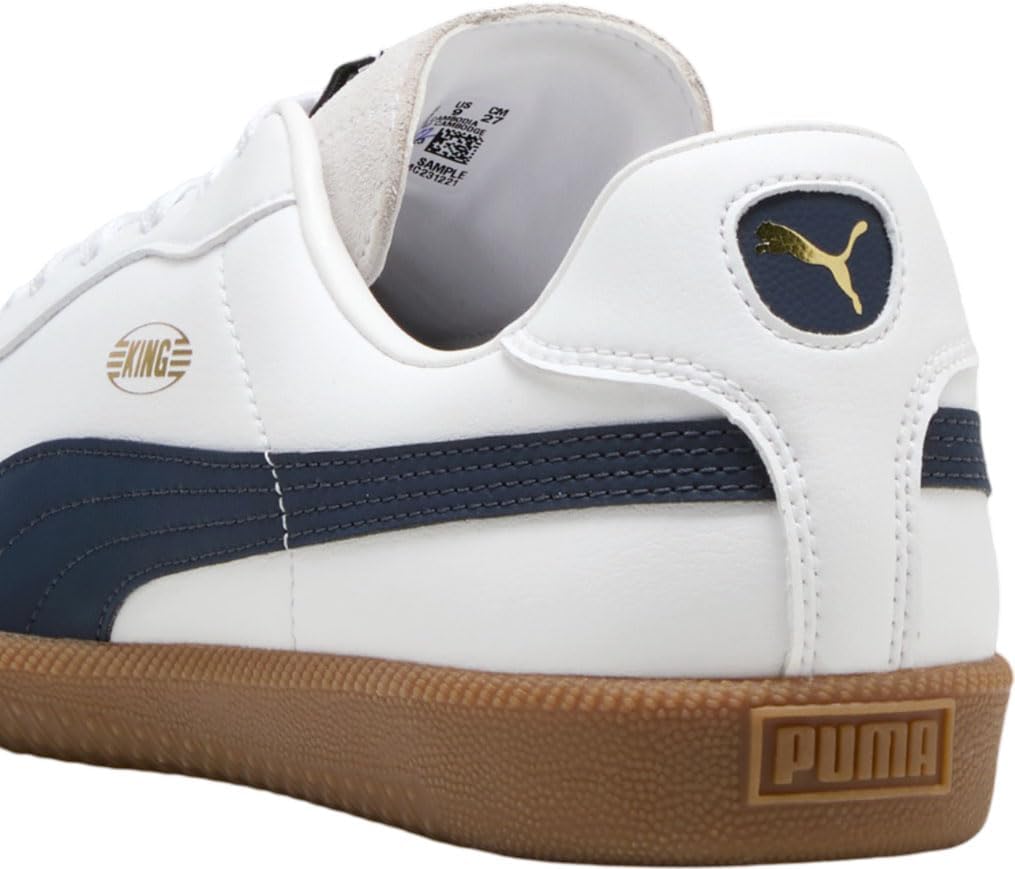
If you play football year-round — outdoor matches on weekends, weeknight futsal (a version of indoor soccer played on a hard court with a smaller, low-bounce ball), pick-up sessions on concrete or asphalt — you already know that your firm-ground cleats are useless the moment you step indoors. Those molded studs are built to grip grass or artificial turf and will slip on polished gym floors or tear up prematurely on abrasive street courts. That’s where indoor-specific and street-specific football shoes fill the gap: flat or near-flat rubber soles engineered for hard, non-grass surfaces. Two options from PUMA that come up repeatedly in this conversation are the PUMA King 21 and the PUMA Club 5v5. This guide breaks down both — what each is built for, who each suits, and how to decide between them without guessing.
What You’re Actually Choosing Between
Let’s get orientation sorted first, because PUMA’s product naming can blur together when you’re browsing quickly.
The PUMA King 21 sits inside one of football’s oldest boot silos. The King name has been in continuous production in some form since the late 1960s, and the 21 designation marks a 2021-era revision of that lineage. The indoor version — typically sold as “King 21 IT,” with IT standing for Indoor Training — is built on a last that leans heritage: a classic leather silhouette, a relatively wide toe box, a low-profile gum or non-marking rubber outsole, and a fit profile that longtime King wearers recognize immediately. SoccerBible’s coverage of the King 21 silo describes it as a boot that trades modern performance trickery for a deliberate, touch-first philosophy — a boot where feel through the upper is the whole point. (Source: SoccerBible, PUMA King 21 review.)
The PUMA Club 5v5 is a different proposition entirely. Launched as an entry-to-mid price-point option explicitly designed for five-a-side formats — the small-sided games that dominate weeknight recreational leagues across Europe and increasingly in North America — the Club 5v5 prioritizes durability and all-surface wearability over premium touch. footballboots.co.uk’s overview of the Club 5v5 describes its outsole pattern as engineered to handle the transition between indoor futsal courts and outdoor hard courts, which is exactly the multi-surface reality that recreational players navigate. (Source: footballboots.co.uk, PUMA Club 5v5 overview.) The upper is synthetic, the price is meaningfully lower, and the target is the player who wants one shoe that goes everywhere without babying.
Performance: Where Each Boot Actually Excels
The King 21 on Proper Futsal Courts
The King 21 is a futsal boot first. If you play in an organized indoor league on a smooth futsal court — the kind of surface where a non-marking sole is required and court shoes are the norm — the King 21’s flat gum outsole and leather upper are built for exactly that environment. The thin, pliable kangaroo leather gives you close-to-the-ball touch that matters when you’re playing with a futsal ball on a low-bounce court and quick one-touch passing is the whole game.
Owners consistently report that the King 21 indoor version breaks in to feel almost like a second skin after a handful of sessions, and that the sole grip on polished gymnasium floors is confident without being sticky-aggressive. SoccerBible’s coverage notes the King upper’s ability to conform to the foot over time as one of its defining characteristics — something synthetic alternatives simply cannot replicate. (Source: SoccerBible, PUMA King 21 review.)
The tradeoff is surface specificity. That smooth gum sole is mediocre on abrasive outdoor surfaces. Take the King 21 to a rough asphalt street court and the outsole wears faster than it should, and the leather upper is more vulnerable to scuffing than a synthetic alternative. The King 21 is a precision tool — it does its best work in the environment it was designed for.
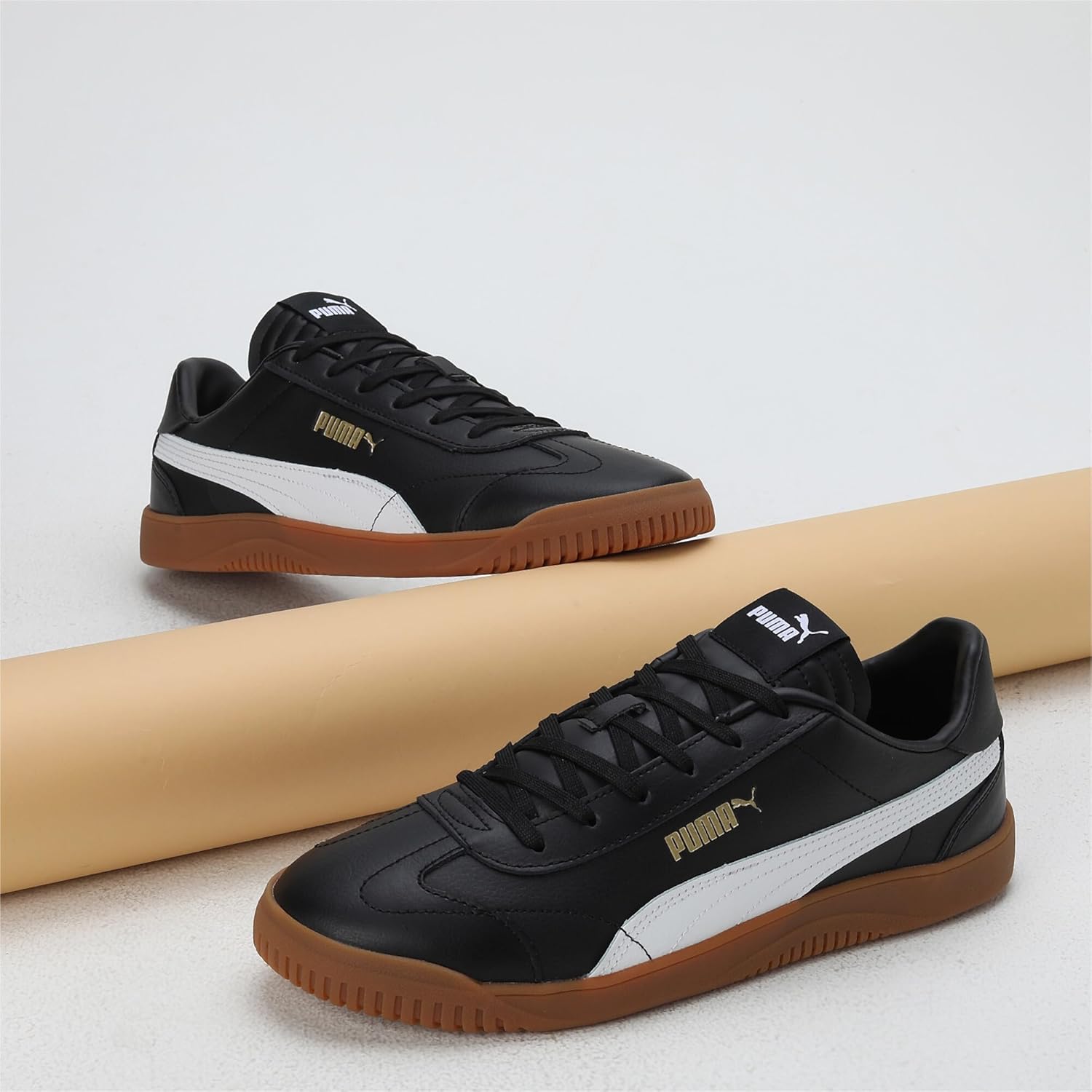
PUMA
$68.06
In stock on Amazon
Check price on AmazonThe Club 5v5 Across Mixed Surfaces
The Club 5v5 is built for the in-between. Footwear News’s coverage of indoor football footwear trends noted a clear market shift toward shoes that can handle the “multi-surface commute” — the player who parks, walks across concrete to an indoor facility, plays on a sprung gym floor, then kicks a ball around outside afterward. (Source: Footwear News, indoor and futsal footwear market trends, 2025.) The Club 5v5’s textured outsole is designed for that friction variety. It grips better on rougher outdoor hard courts than the King 21’s smooth sole does, and it handles light indoor court play acceptably.
What it gives up is touch and longevity of feel. The synthetic upper does not break in the way leather does — it stays comparatively stiff, and owners report it never quite disappears underfoot the way King leather does. If you’re a technically-minded player who uses indoor sessions specifically to work on touch and ball control, that gap matters. If your indoor play is mostly casual five-a-side on a multi-purpose gym floor and you’re not in a competitive futsal league, the gap matters considerably less.
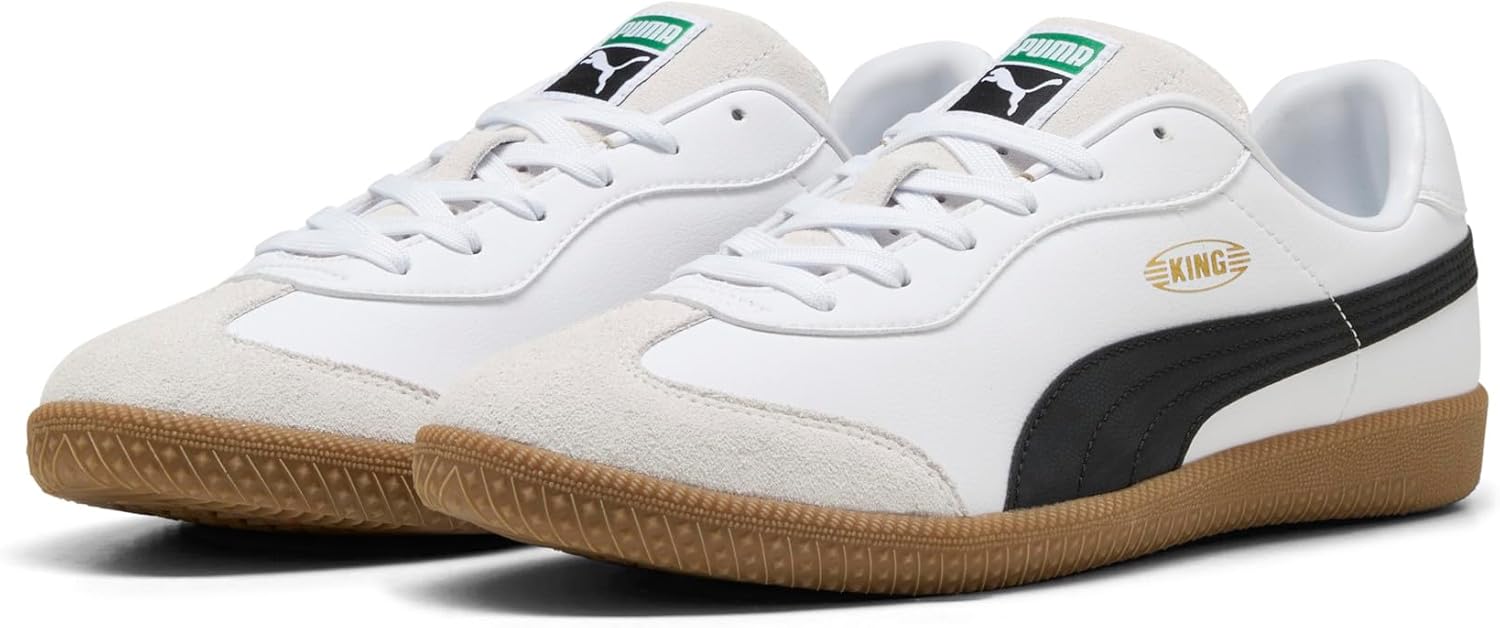
PUMA
$47.98
In stock on Amazon
Check price on AmazonThe Budget Case and Entry-Level Reality
For players whose indoor play is infrequent, informal, or spread across wildly inconsistent surfaces — a parking structure one night, a church gymnasium the next — neither boot needs to be treated as a long-term technical investment. In this scenario the Club 5v5’s lower price point is the honest recommendation. Goal.com’s futsal equipment and surface guide notes that recreational indoor players often overinvest in surface-specific footwear before they’ve established a consistent training environment, and a durable all-surface synthetic shoe at under $75 is the sensible starting point. (Source: Goal.com, futsal equipment and surface guide.) If your game evolves into a structured futsal league on proper courts, that’s the moment to step up to the King 21 — not before.
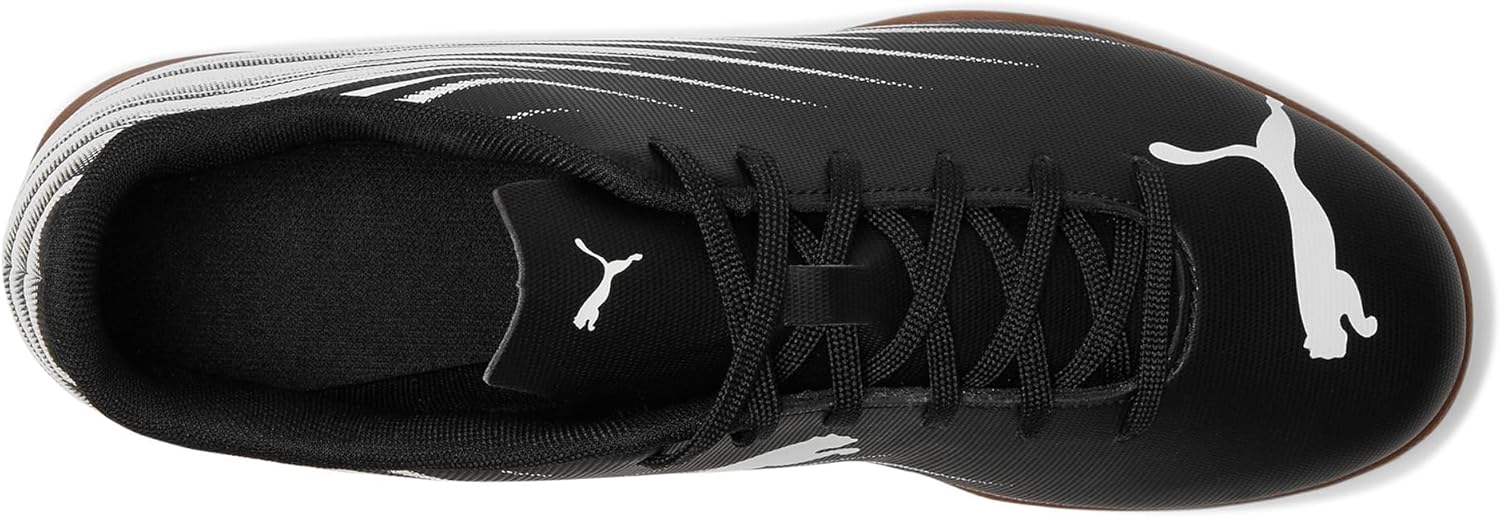
Puma
$37.95
In stock on Amazon
Check price on AmazonSide-by-Side Specifications
| Feature | PUMA King 21 (Indoor) | PUMA Club 5v5 |
|---|---|---|
| Upper material | Kangaroo leather (premium) or synthetic (entry versions) | Synthetic textile |
| Outsole | Non-marking gum rubber, smooth | Multi-surface textured rubber |
| Typical retail price (2026) | $90–$130 (leather) / $65–$85 (synthetic) | $55–$75 |
| Best surface | Futsal court, polished gymnasium | Hard court, street, mixed/light indoor |
| Fit width | Medium-wide (generous toe box) | Narrow-to-medium |
| Weight character | Heavier, substantial | Lighter, athletic trainer feel |
| Break-in period | Moderate (leather softens and conforms) | Minimal (synthetic, fits from day one) |
These figures reflect published retail listings and manufacturer construction documentation as of Q2 2026.
The Fit Problem Nobody Mentions
This is where PUMA’s two options genuinely diverge, and it’s the detail most buying guides skip entirely.
The King 21 runs on a last that is notably roomier in the toe box than most modern football shoes. If you have a wider forefoot, a high instep, or toes that spread when weight-bearing — common in players who have spent years in firmer-soled football boots — the King 21’s indoor version is one of the most comfortable fits in this price range. footballboots.co.uk’s coverage of the King silo notes that it has maintained its traditionally generous forefoot width across multiple generations, which explains its loyal following among players who have been frustrated by narrow modern lasts. (Source: footballboots.co.uk, PUMA King 21 and King silo fit notes.)
The Club 5v5 runs narrower. The synthetic upper has less inherent give than leather, and the last shape is more consistent with a standard athletic trainer profile. Players with narrow-to-medium feet often find the Club 5v5 fits snugly and securely from day one — which they prefer. Players with wider feet report forefoot pressure after extended sessions. If that’s your history with synthetic football shoes, size up half a size and assess accordingly.
The practical decision rule: If you’ve ever bought a football boot in a standard width and found the toe box cramped by the second half of a match, the King 21 is the safer fit bet. If you have average or narrow feet and want a shoe that performs adequately across multiple surfaces without a break-in period, the Club 5v5 is the lower-friction choice.
Cost-Per-Session Math
Here’s a frame that makes the price gap meaningful rather than abstract.
Assume you play 40 indoor or street sessions per year — roughly two weeknight sessions per week across a six-month indoor season, plus scattered street play in the off months. That’s a realistic load for a year-round club player.
- King 21 leather (~$120) over 40 sessions: $3.00 per session — before accounting for the fact that leather uppers, when maintained with basic conditioner, can extend usable life well beyond what a synthetic alternative offers.
- Club 5v5 (~$65) over 40 sessions: $1.63 per session — but if the synthetic upper degrades faster on abrasive surfaces and you replace it after 25–30 sessions rather than 40+, the per-session cost closes toward rough parity.
This is an inference from published specifications and long-run owner review patterns rather than a controlled durability test. But the consistent pattern across owner reviews of leather King boots versus entry-tier synthetic alternatives supports the “leather lasts longer with maintenance” conclusion. The gap at purchase narrows over a full year of actual use.
The Club 5v5 remains the right call at a tighter total budget. But players already investing $150 or more in their outdoor boots should consider the King 21 as the natural indoor complement — the per-session math holds up, and the technical return justifies it.
Who Should Buy Which
Buy the PUMA King 21 indoor version if:
- You play in an organized futsal league on a proper smooth court where non-marking soles are required.
- Touch and ball feel are central to how you train — you use indoor sessions to sharpen technique, not just to stay fit.
- You have a wide or high-volume foot and have been frustrated by how most modern football shoes fit.
- You’re willing to spend moderately more and maintain leather uppers with basic care to get a boot that lasts multiple seasons.
Buy the PUMA Club 5v5 if:
- Your indoor play is casual five-a-side on multi-purpose gym floors, outdoor hard courts, or genuinely mixed surfaces, and you need one shoe that handles all of them.
- Budget is a real constraint and you want a functional, durable option under $75.
- You have average or narrow feet and prefer a shoe that fits securely from the first session without a break-in period.
- You want a workhorse rather than a heritage precision tool.
The Bottom Line
These two boots are not competing for the same player in the same moment. The King 21 is a serious indoor instrument for players who take futsal seriously — it rewards the player who wants to feel the ball, who plays on proper courts, and who sees their indoor boot as a precision asset. The Club 5v5 is a practical, affordable, multi-surface solution for players whose indoor play is recreational and who need one shoe to handle the whole chaotic reality of year-round training across imperfect surfaces.
If you’re genuinely on the fence, answer one question honestly: are your indoor sessions in a structured futsal environment with proper courts, or are they mostly informal games on whatever surface happens to be available? If it’s the former, stretch to the King 21 — you’ll feel the difference within a session or two, and the long-run cost math justifies it. If it’s the latter, the Club 5v5 does the job without making you anxious about running it across rough asphalt.
Either way, the right indoor shoe is always better than the wrong surface for your outdoor cleats — and that’s the upgrade most players delay the longest.